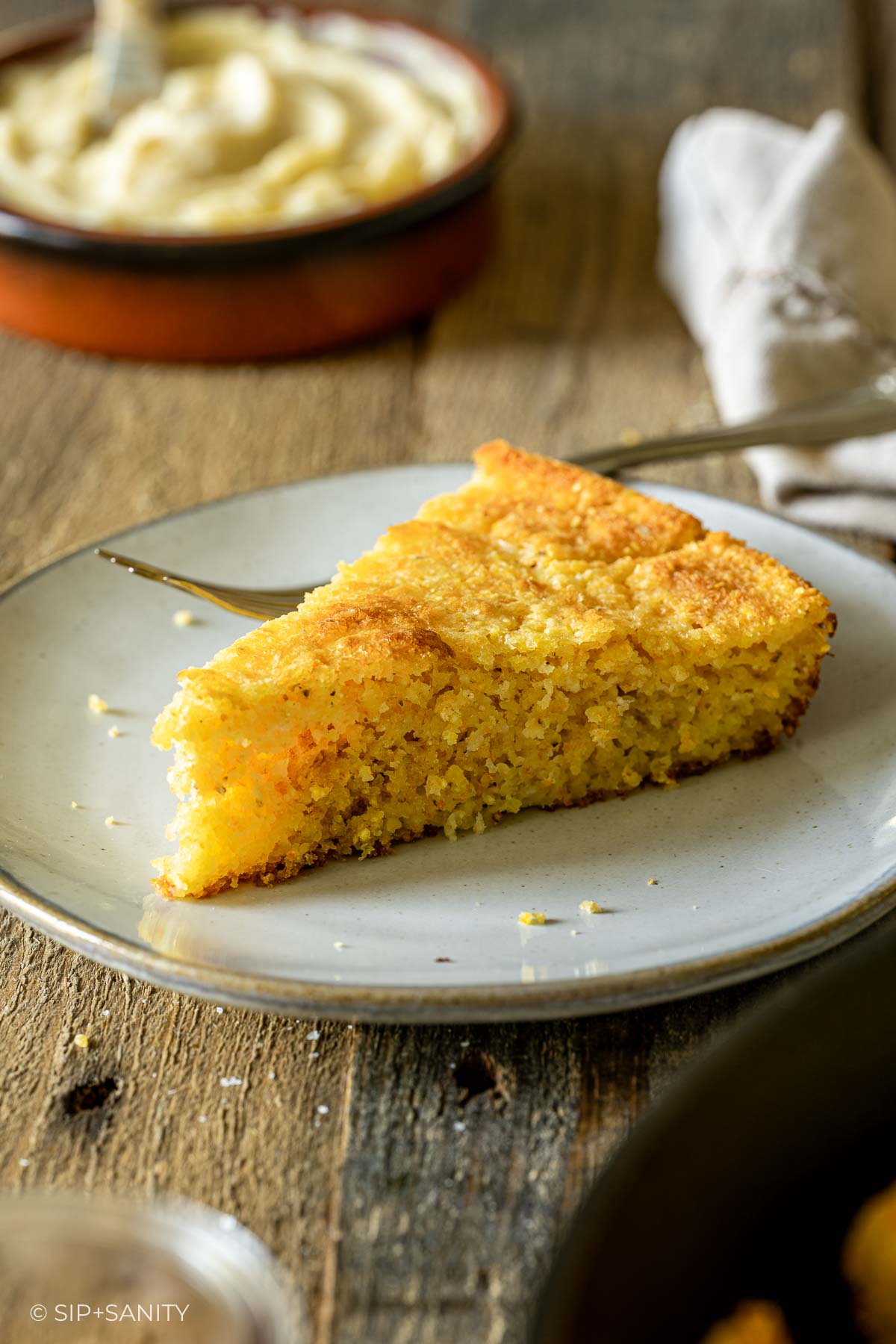


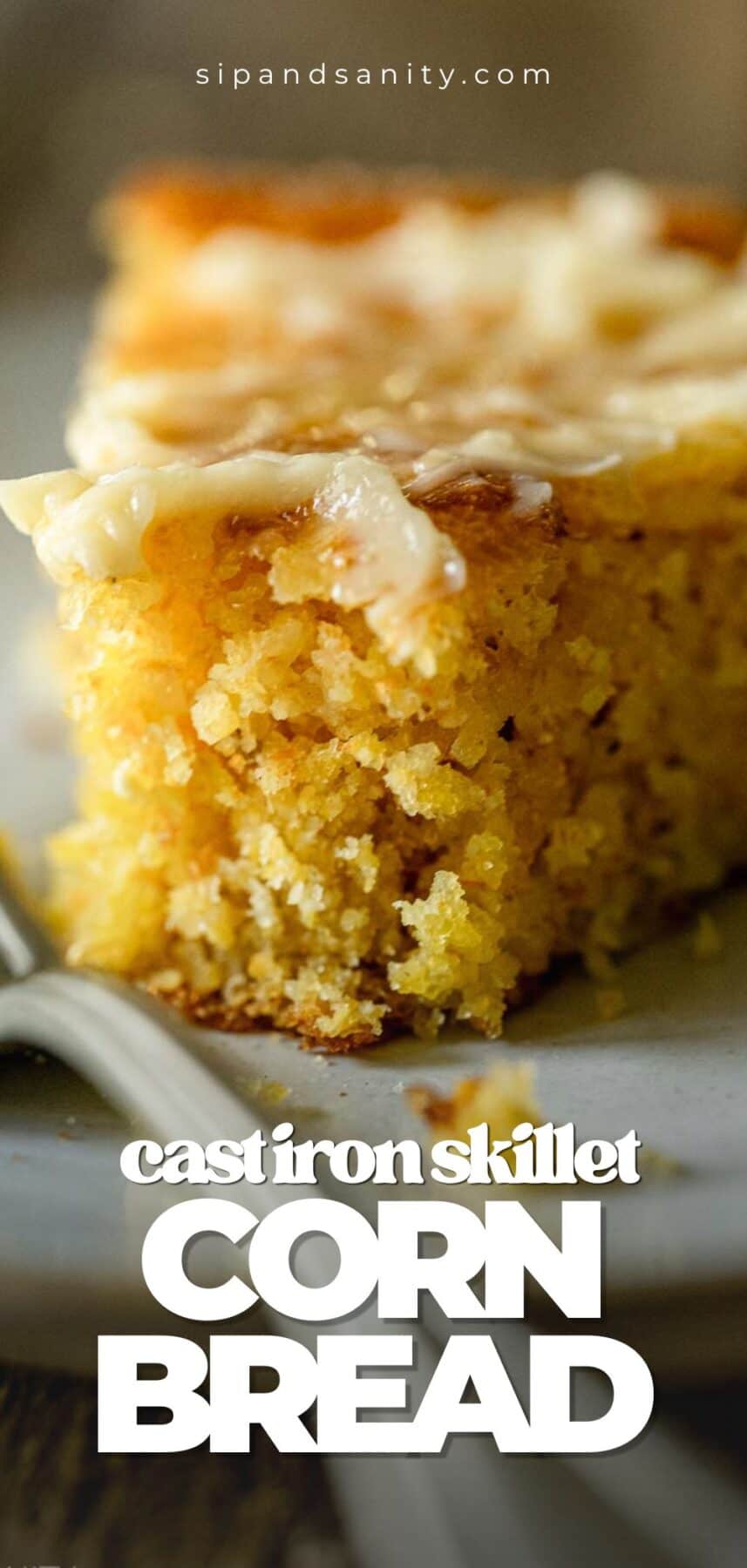
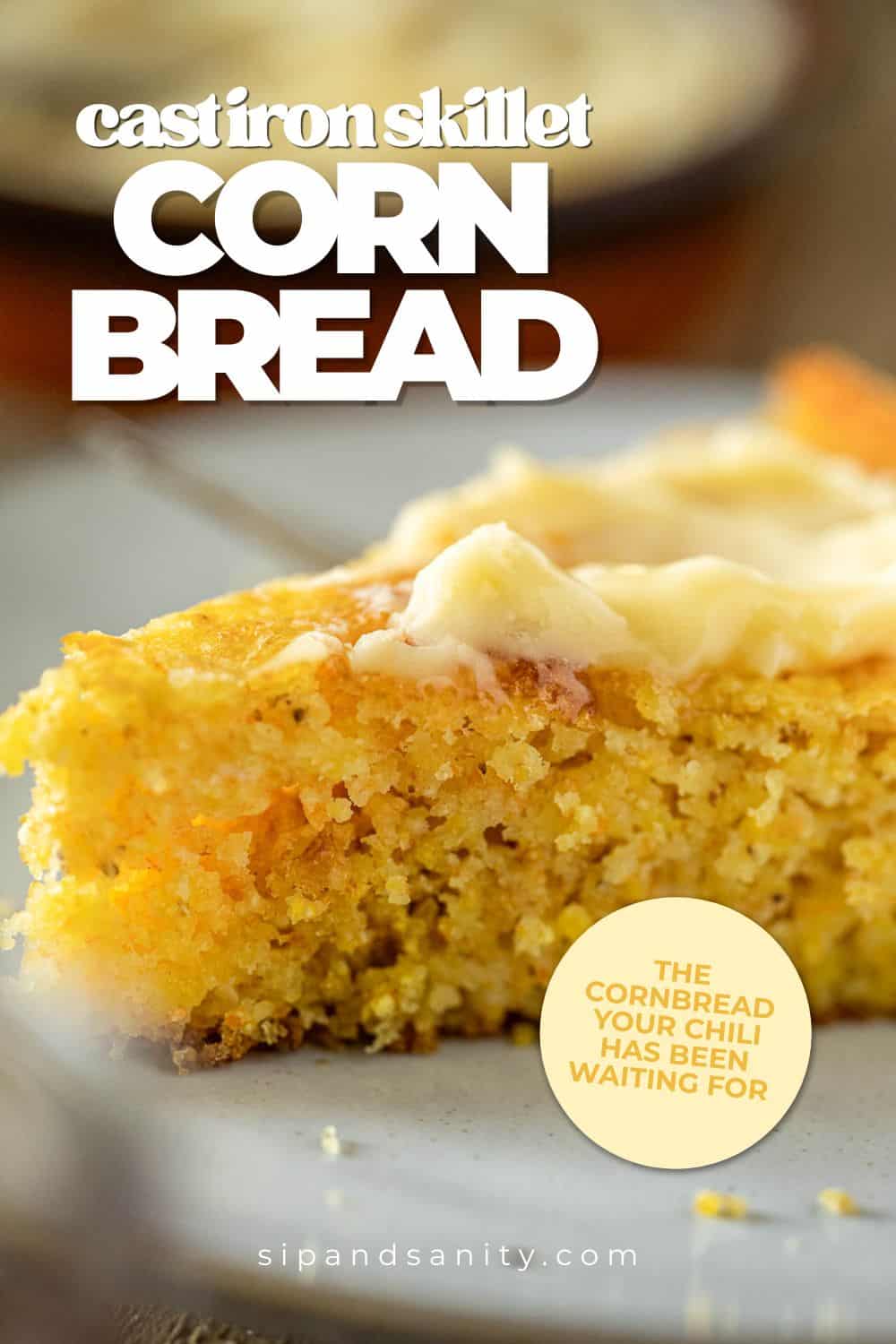
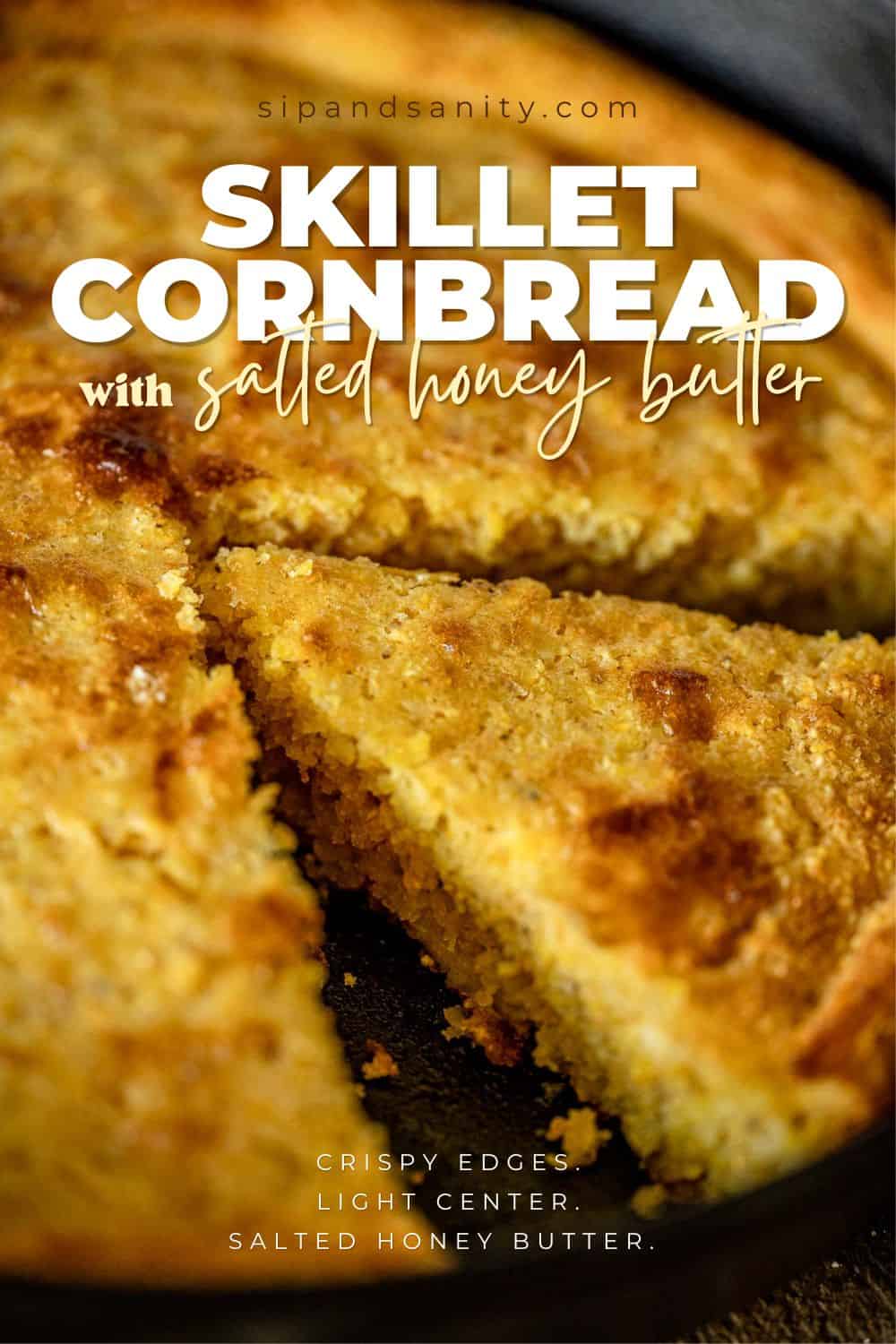
From-scratch cast iron skillet cornbread with crispy golden edges, a light (not dense!) center, and just the right touch of sweetness. This is the one you make alongside your chili, your soup, your BBQ situation, and then every other night just because.
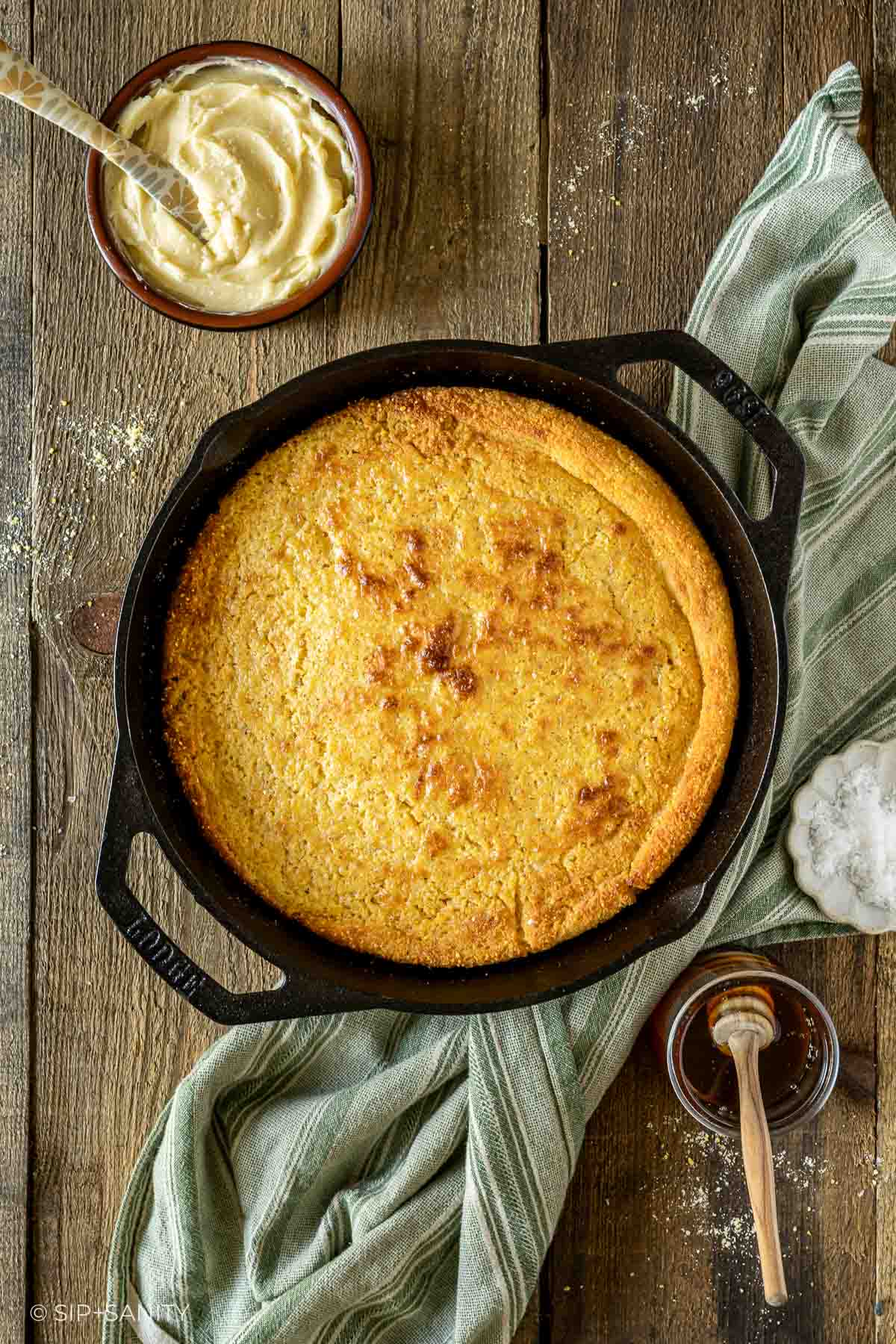
I built this recipe specifically for me, which means it ticks every box I care about: crispy edges from a screaming hot cast iron skillet, a corn-forward crumb that’s light instead of stodgy, and a sweetness level that plays nicely with savory mains. I tested it several times — swapping sour cream for milk, adjusting the cornmeal-to-flour ratio, and switching skillet sizes. Then I added a salted honey butter situation, because of course I did. Consider that the icing on top.
The Dish Details
- Cast iron magic. Preheating the skillet in the oven gives you crispy, golden edges and even heat from the moment the batter hits the pan — and the bread won’t stick.
- From scratch, no shortcuts. Simple pantry ingredients, no box mix required. Just real cornbread that earns a permanent spot in your rotation.
- Sweet, light, corn-forward. The flour-to-cornmeal ratio is intentional: more cornmeal for flavor, a light center (not a hockey puck), and just enough sweetness to balance savory mains.
- That honey butter, though. Salted honey butter takes this from great to “why would I ever buy cornbread again.”
A Cornbread Built the Way I Actually Want It
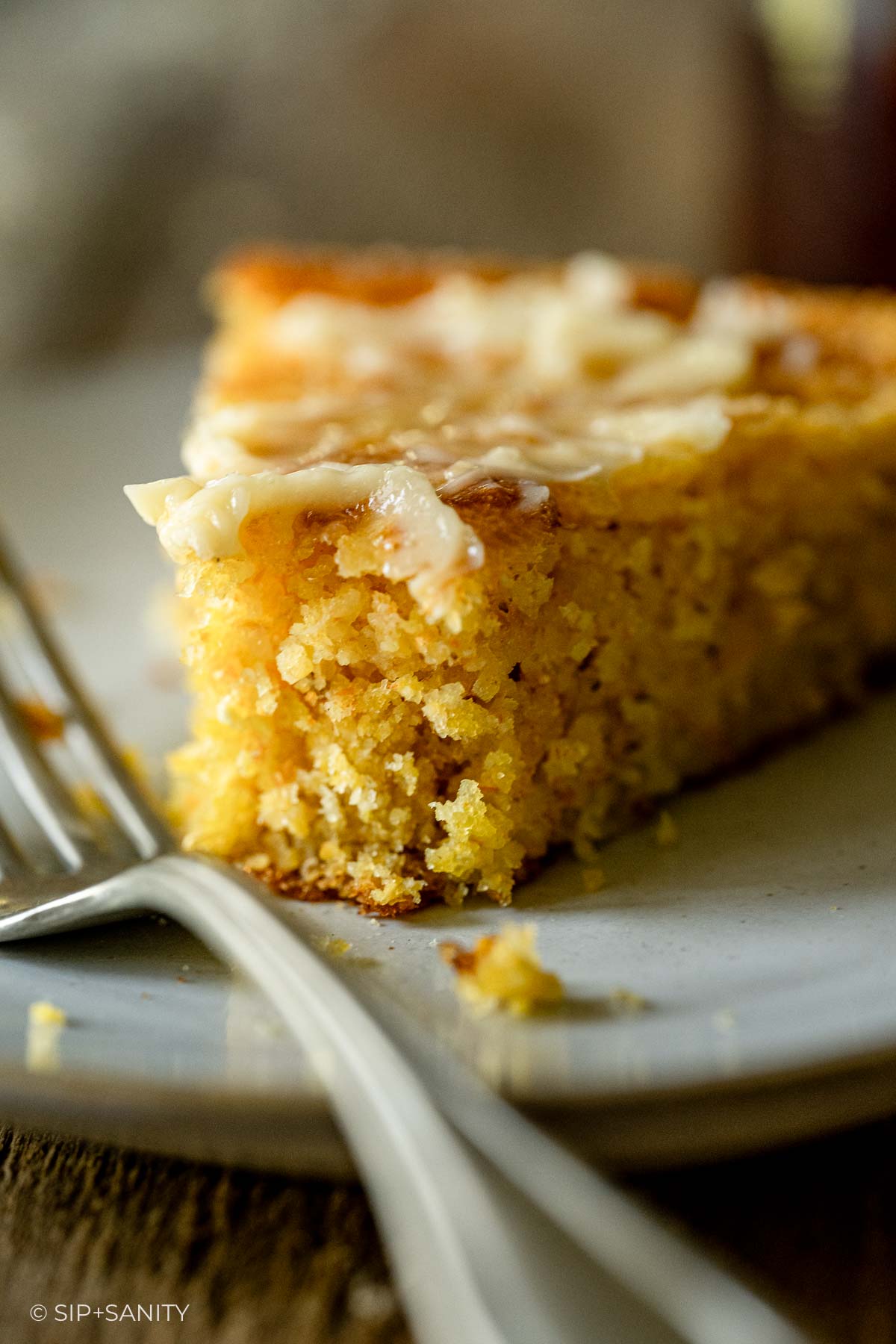
There’s no shortage of cornbread recipes out there, but when I sat down to develop this one I had a very specific vision: crispy edges, a light and tender center, sweet enough to be interesting but not so sweet it reads as dessert, and real corn flavor front and center.
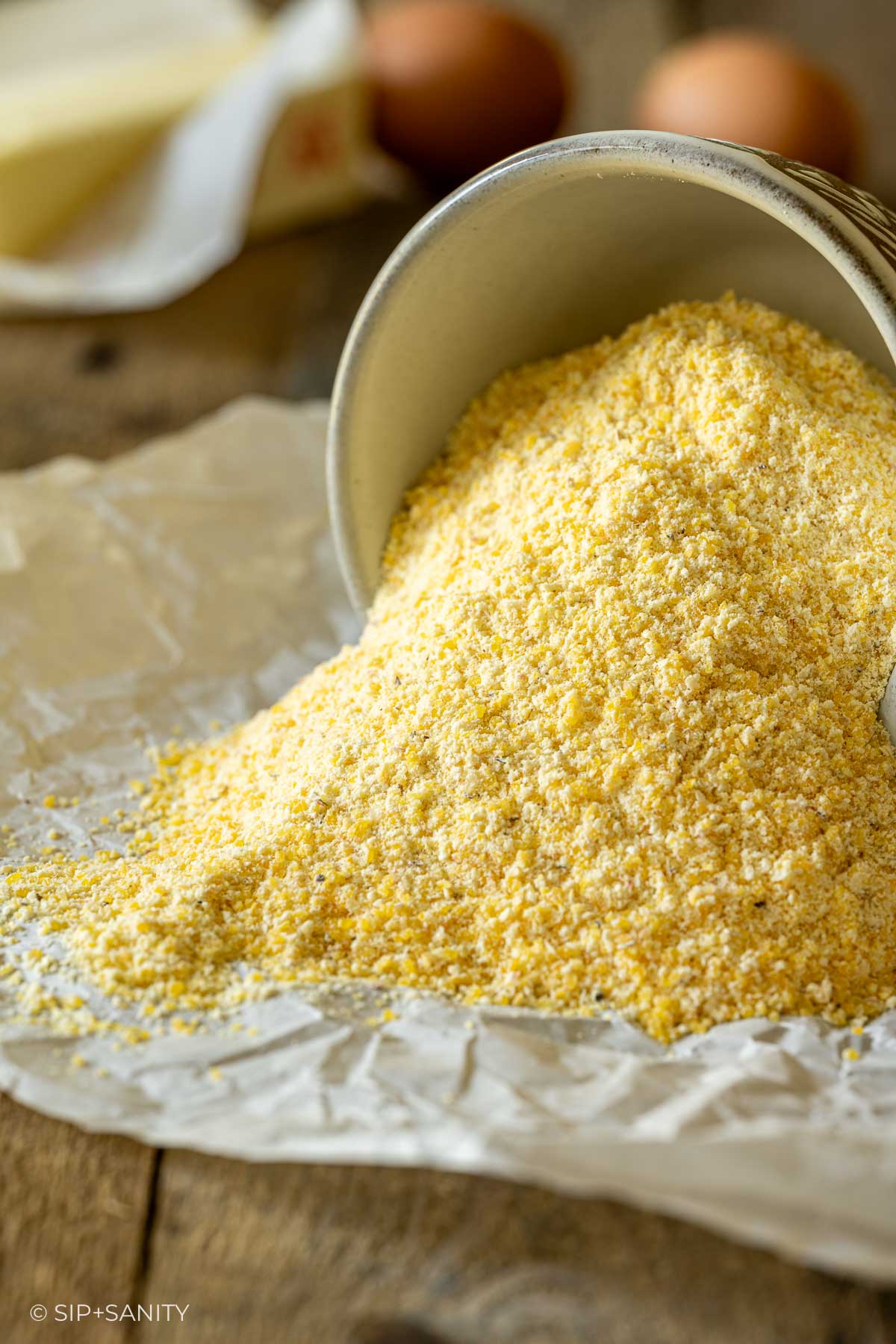
The key to that last part is the ratio of cornmeal to flour. A lot of cornbread recipes split them close to 50/50. This one tips the scale in cornmeal’s favor — and I weigh both rather than measuring by volume, because consistency matters when you’re going for a specific texture. More cornmeal means more corn flavor and a lighter, more open crumb. Less flour means less density. That’s the whole game.
The sweetness level is also a deliberate choice. If you’re a “cornbread should never be sweet” purist, I respect you and I am not your person. This one has enough sugar to round out the flavor and complement a bowl of chili — not enough to make it feel like cake. (Of course, that’s all relative.)
The Skillet Is Doing Half the Work
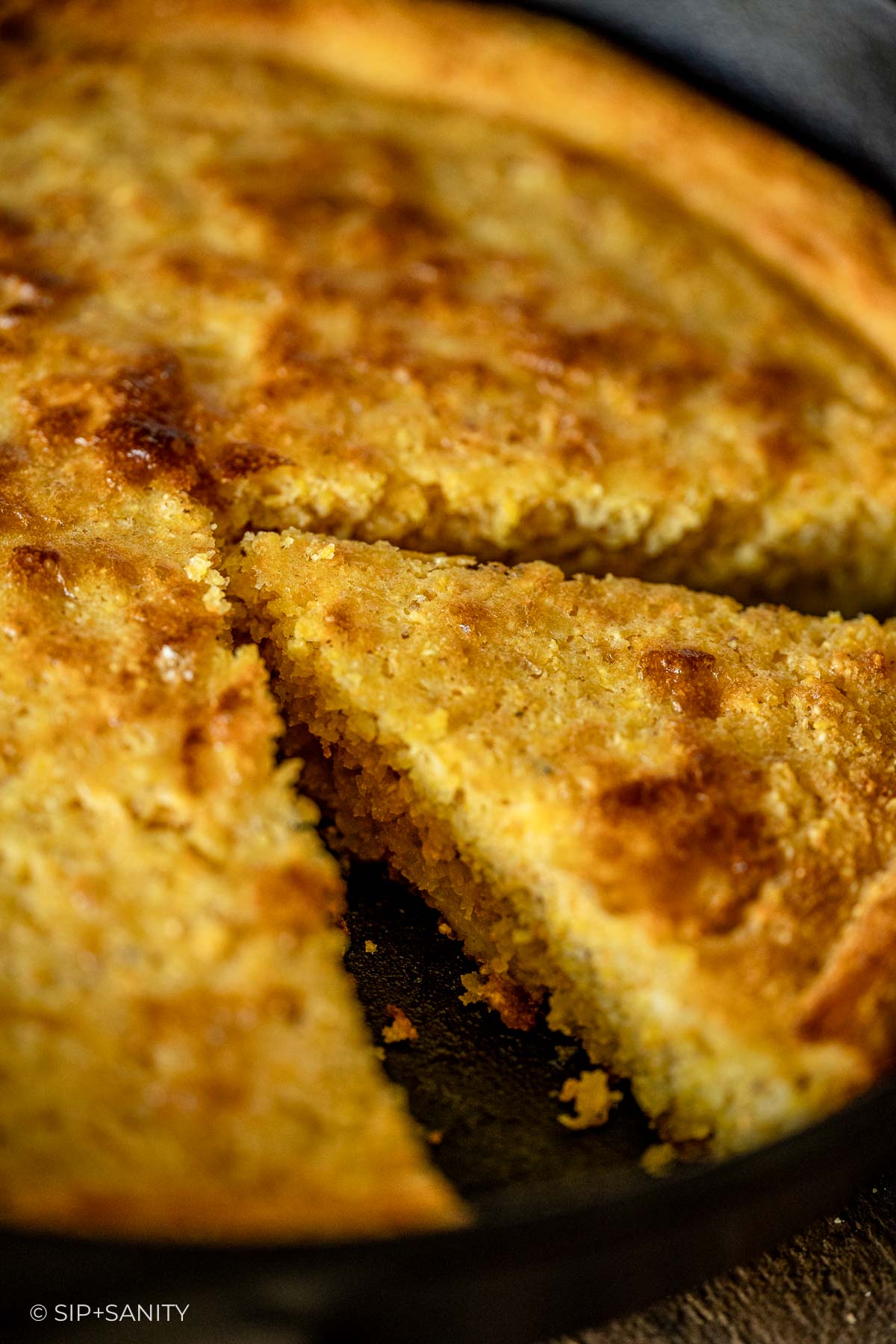
Here’s the thing about cast iron cornbread: it’s not just a vessel. A properly preheated skillet is basically doing half your work before the batter even lands in it.
When you preheat the skillet in a 425°F oven, the entire surface — bottom and sides — gets ripping hot. The moment the batter touches it, the edges start to set and caramelize immediately. That’s your crunch. That’s the part everyone fights over. You can’t get it from a cold pan.
About That Salted Honey Butter
The salted honey butter deserves its own conversation, but first: a word about butter and hot skillets.
Every recipe that involves adding butter to a preheated cast iron will tell you to “use butter”. What most don’t specify is what state that butter should be in. I learned this the hard way: adding melted butter to a screaming hot skillet is a great way to fill your kitchen with smoke, splatter oil across your stovetop, and end up with bitter burned edges instead of golden ones. Soft, room-temperature butter takes just a few extra seconds to melt in the pan — and those few seconds are the difference between a gentle sizzle and a small grease fire situation.
Room temp. Soft. Two tablespoons. Swirl to coat. Done.
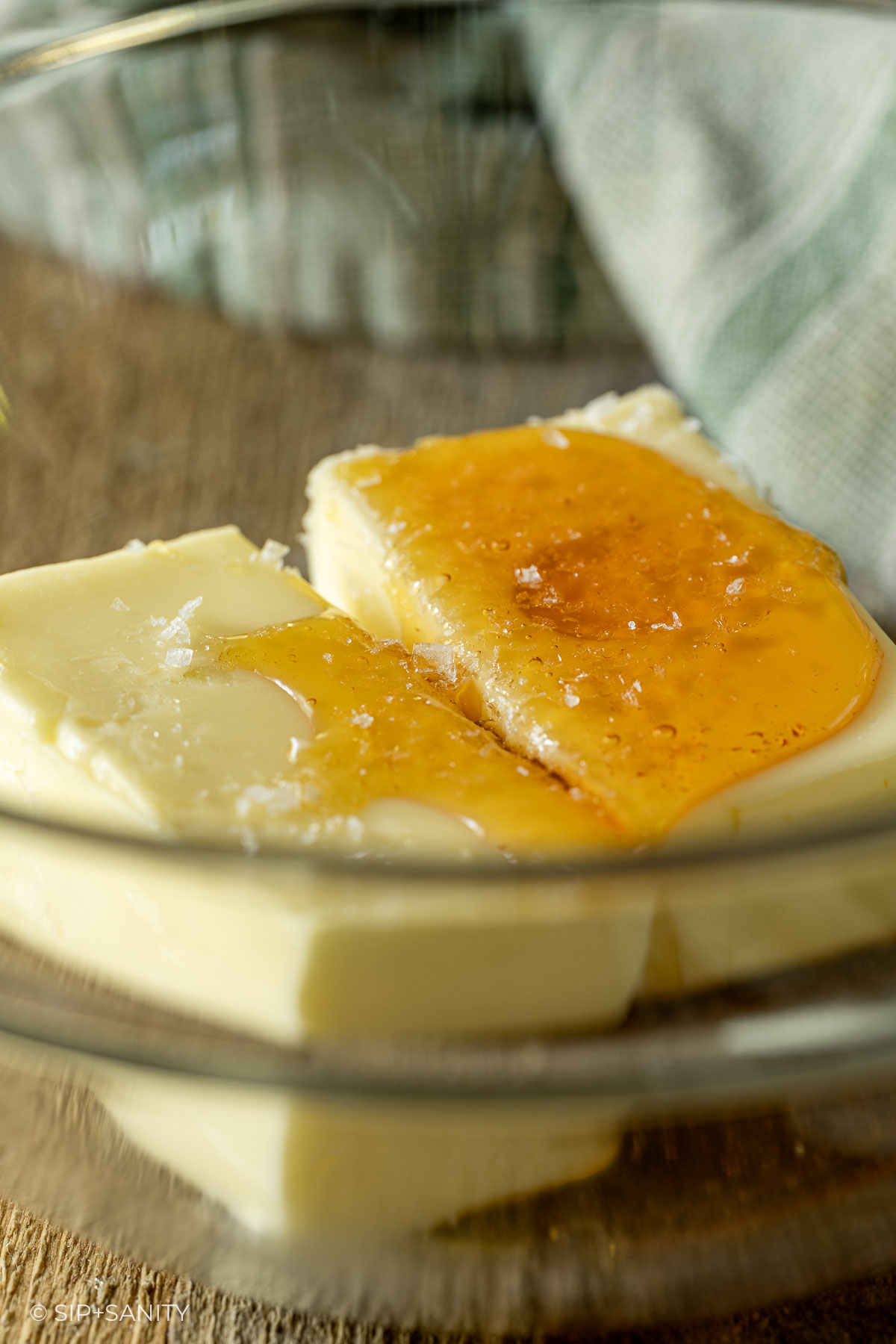
Now, the honey butter. It’s almost embarrassingly simple — softened butter, honey, flaky salt — and it’s completely non-negotiable. The contrast of salty, sweet, and rich against that warm, slightly crispy cornbread is exactly what you want. Spread it on a slice straight out of the oven while the bread is still warm enough to melt it. That’s the move.
Let the Batter Do Its Thing
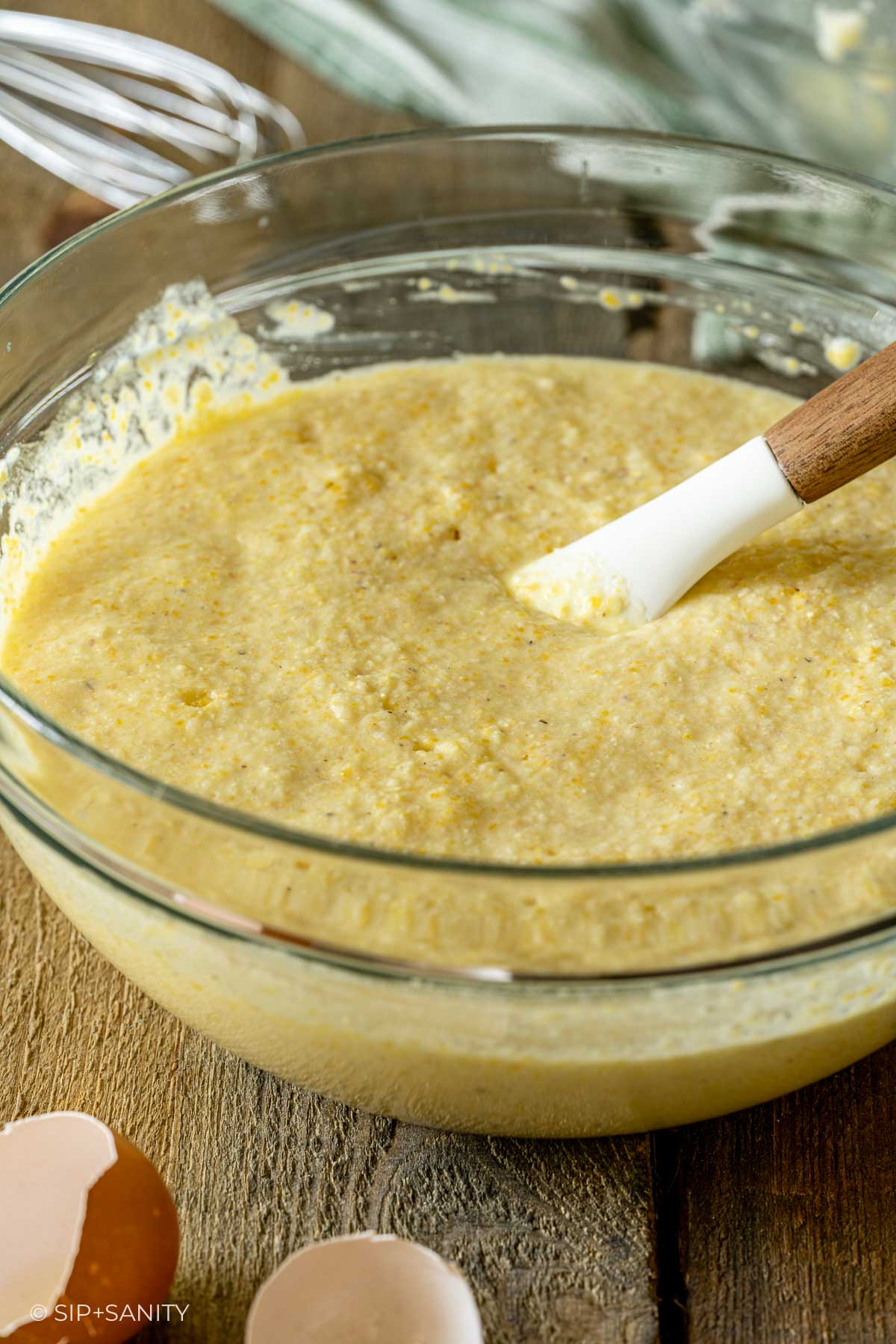
Before you pour the batter into the skillet, you’re going to wait 10 minutes. I know. But here’s what’s happening during those 10 minutes: the cornmeal is hydrating (which gives you a more cohesive, tender crumb), and the buttermilk and baking soda are activating (which gives you lift). Skip the rest and you’ll notice it in the texture.
One more thing: this batter is loose. Like, looser than you might expect from a quick bread. That is correct and intentional. Don’t add more flour. Don’t panic. Pour it into the hot skillet gently — you’ve built up some air bubbles in that batter and you want to keep them — and let the oven do the rest.
The cornbread bakes at 425°F for 17-19 minutes. It moves faster than a lot of cornbread recipes, so don’t wander too far. When the edges are deeply golden and pulling away from the sides of the skillet, you’re there. A toothpick with a few moist crumbs (not wet batter) is your cue to pull it out.
Skillet Cornbread with Salted Honey Butter
Equipment
Ingredients
Dry:
- 6 ounces yellow cornmeal, (medium grind for texture)
- 2 ounces all-purpose flour
- 2 ounces granulated sugar
- 1 tablespoon baking powder
- ½ teaspoon baking soda
- 1 teaspoon kosher salt
Wet:
- 1 cup low-fat buttermilk, (room temperature)
- ½ cup milk, (room temperature)
- 2 large eggs, (room temperature)
- 6 tablespoons unsalted butter, melted & slightly cooled
For the skillet:
- 2 tablespoons unsalted butter, (softened) cut into 2 pats
Salted Honey Butter:
- ½ cup unsalted butter, softened
- 2 tbsp honey, (or to taste)
- ¼ tsp flaky salt, (or to taste)
Instructions
- Preheat the oven to 425°F. Place your 10-inch cast iron skillet in the oven while it heats.
- In a large bowl, whisk the dry ingredients together thoroughly.
- In another bowl, whisk the wet ingredients until smooth.
- Pour the buttermilk mixture into the dry ingredients and gently fold until just combined, when you see no dry streaks. A few lumps are fine. (This is a loose batter.)
- Set a timer for 10 minutes and let the batter rest to hydrate the cornmeal and allow the buttermilk and baking soda do their thing. (The batter should appear 'fluffy' after it rests.)
- Using oven mitts, carefully remove the hot skillet and add the 2 tablespoons of softened butter. Swirl to coat the bottom and sides. (Use a pastry brush if that's helpful.)
- Pour the batter gently into the hot skillet to prevent deflating (it should sizzle slightly).
- Bake 17-19 minutes until golden brown, the center is set, and the edges are deeply crisp and beginning to pull away from the sides. (Test at 17 minutes with a pick. If a few crumbs stick to the pick, it's done; there will be some carryover cooking.) Remove from the oven and let it rest for at least 5–10 minutes before slicing.
- While the cornbread bakes, whip the honey butter ingredients together until fluffy. Taste and adjust with salt and/or honey.
Notes
- Storage: Transfer leftovers to an airtight container. Store on the counter for one day, or up to 3 days in the refrigerator.
- Reheating options:
- Warm in 30 second increments in the microwave.
- Toast in a skillet on your cooktop.
- Reheat in a 350°F oven on a parchment lined sheet pan.
Nutrition
What to Serve With Skillet Cornbread
The obvious answer is chili, and yes, absolutely — a bowl of chili (you’ve got to try this award-winning chili!) and a wedge of this cornbread is one of fall/winter’s greatest combos. But this cornbread is a workhorse. Here’s where else it earns its keep:
- Soups and stews — tomato basil soup, beef stew, chicken taco soup, vegetable soup. Anything with a broth or sauce that needs something to soak it up.
- BBQ nights — pork spare ribs, pulled pork, brisket. Cornbread belongs at that table.
- Game day spreads — serve it straight from the skillet alongside chili dip, spicy grilled wings, whatever you’re working with.
- Breakfast — leftover cornbread warmed in a skillet with a little extra honey butter (alongside some scrambled eggs?). Not sorry.